The Sea of Sameness
Why Iconic Brands Can’t be Built on Prompts
TL;DR
In the age of AI, the barrier to entry for "good enough" has officially dropped to zero. When decent design and copy are free and instant, the internet rapidly fills up with visual sameness. Iconic brands don’t succeed by being statistically predictable. Partnering with a studio like Paohaus isn't about buying raw deliverables—it's about investing in taste, structural engineering, human alignment, and proprietary assets that no algorithm can replicate. If you want a brand that’s merely functional, use a prompt. If you want to build an icon, hire a studio.
The Death of the Average Brand
Let’s address the elephant in the room. AI can write a highly functional marketing email, generate a clean product mockup, and draft basic Shopify Liquid code in about three seconds. If you ask it to, it will even analyze your competitor’s website and give you a perfectly logical layout for your new product detail page.
It’s fast, it’s cheap, and it’s remarkably efficient.
Because of this, brand managers and marketing directors are increasingly finding themselves in a difficult position. They walk into boardrooms with proposals for agency partnerships, only to be met by a CFO pointing at an enterprise software budget and asking a frustratingly simple question: Why are we paying for a boutique studio when we have an AI tool that can do this for free?
It’s a fair question on paper, but it rests on a fundamentally flawed assumption about how modern commerce actually works.
The reality of our current digital landscape is that the barrier to entry for "good enough" has officially dropped to zero. Anyone with an internet connection can now generate a symmetric layout, a grammatically perfect caption, and a clean digital storefront.
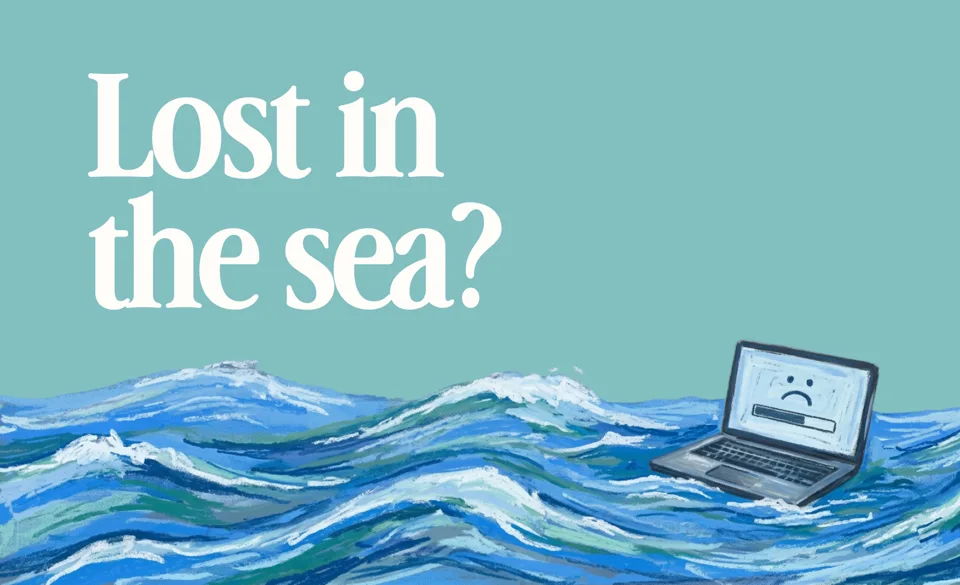
But when average quality work becomes instant and free, a strange side effect occurs: the internet rapidly fills up with visually homogenous, mechanically perfect, completely soul-less entities. We’re living through an unprecedented wave of digital sameness, where every new brand storefront looks like a slight variation of the same template, using the same tone of voice, targeting the same consumer subconscious.
This is the copy-paste, sea of sameness trap that prompt-based design creates. And for brands looking to take off, falling into it is fatal.
In the age of infinite automated content, standing out is no longer about production speed. True digital equity is now built on curation, tactile quality, human storytelling, and execution.
Design studios are not relevant because they can make things. We are relevant because we have the taste to know what not to make.
The value of a human-centric creative team isn't found in the raw mechanics of pushing pixels or writing code. It’s found in the deliberate, highly strategic decisions to break the rules, introduce purposeful friction, and build an experience that feels like it was crafted by human hands for a human audience.
Why Prompt-Built Brands Fall Flat
To understand why a brand built entirely on prompts will always feel flat, you have to understand how generative models actually work. AI operates on mathematical probability. When you ask a machine to design a grid or write a headline, it doesn’t tap into a reservoir of lived human experience, cultural memory, or artistic intuition. It analyzes the vast, historical scrapings of the internet and calculates the most statistically likely "correct" answer.
By its very nature, generative AI is an optimization engine for the average. It’s built to give you the consensus.
But iconic brands don’t build empires by being statistically predictable. If your digital storefront looks exactly like what a machine calculates a store should look like, you have successfully designed a basic commodity. You’ve built a white-walled gallery with no point of view.
This is what we call the taste deficit problem.
Distinct, category-defining brands succeed because they choose to step outside the consensus. They play with asymmetry. They introduce deliberate friction points. They use unexpected color pairings or a highly specific, poetic tone of voice that a probability model would flag as an error and automatically smooth away. Put simply, the brands that make waves have taste.
When you hire a boutique studio, you’re not buying a list of deliverables, you’re investing in a team of human designers who understand the nuances of building brands for a human audience. They know when a layout needs to breathe, when a line of copy needs to carry a touch of self-deprecating wit, and they know where to break a standard user experience pattern to surprise and delight a customer.
We don't aim for the statistical average. We design for the human subconscious, which is wonderfully, beautifully irrational.
The Problem with a "One-Click" Code Base
Why shouldn’t you use an AI agent to write your code base? After all, AI tools can output fifty lines of functional CSS or a clean Javascript function in real time, thus automating the role of traditional development engineers, no? Why hire a front-end specialist when you can just prompt your way to a functional site?
The answer to these questions may not find you immediately, but in time, inevitably, the invisible, compounding debt of unoptimized, templated code will come due.
AI writes code in a vacuum. It’s brilliant at solving isolated, highly specific tasks, but it’s completely blind to your larger technical ecosystem. A machine doesn’t understand how your legacy inventory management integrations, dynamic variant limits, or your localized tax APIs are going to interact under heavy stress. It can’t foresee the conflicts that arise when you stack multiple third-party apps on top of a fragile, AI-generated base.
When you rely on automated code, you’re essentially building your house on a foundation of loose sand. Your website might look stunning on a quiet Tuesday afternoon, but the moment you experience a high-volume traffic spike, the system is liable to slow down, throw errors, or completely collapse.
When you invest in human engineering, you’re not paying for someone to simply write syntax. You’re paying for structural integrity, performance optimization, and future-proofing.
A dedicated engineering team builds custom, component-based Shopify architectures that are lightweight, incredibly fast, and exceptionally stable. More importantly, we build with a merchant-first mindset. We don't build a complex black box that traps you in a cycle of developer dependency. We design intuitive, flexible backends that your internal marketing team can actually navigate and update on their own, ensuring your digital storefront remains an asset rather than a liability.
Prompted Designs for Multiple POVs
There’s an unspoken assumption embedded in the idea of prompt-based design: it assumes that everyone in the room already agrees on what the prompt should be.
But in the real world of building businesses, that’s almost never the case.
We’ve all been in that kind of meeting. One stakeholder wants the site to feel "heritage and established." Another wants it to feel "edgy and disruptive." Yet another wants it to feel "highly conversion-focused and clean." If you feed those three conflicting directives into an AI generator, you’ll get back diluted work that tries to be everything to everyone and ends up saying absolutely nothing. No point of view, no taste.
An AI cannot read the room. It can’t read between the lines, understand subtext, and ask the probing, uncomfortable questions that get to the heart of why a brand exists in the first place. It also can’t push back against a subjective opinion by grounding the conversation in objective user data.
Conversely, an agency’s primary value in this situation is translation, alignment, and mediation, followed by execution.
When we work with a brand, our first job is to step into the middle of those conflicting human ambitions and opinions. We act as the objective filter. We listen to the passion, dissect the arguments, analyze the competitive landscape, and unify a divided team under a single strategic direction. We build the boundaries of the brand book so that everyone is finally speaking the same language.
You can't prompt a machine to align a boardroom. That requires empathy, human context, and the courage to fight for the integrity of the work.
One Brain Fits All
Consider the reality of relying on AI for your brand assets. If you and your three main competitors are using the same large language models and generation engines to draft your customer retention flows, design your product detail pages, and write your social copy, you’re all drawing from the same digital well.
Over time, your brands will inevitably begin to sound, look, and feel identical. You’re essentially sharing a single, outsourced brain with your competition.
In a crowded market, the most important thing your brand has is originality.
You can’t build an original, proprietary brand identity using non-proprietary, scraped assets that everyone else is also using. To stand out, you need assets that are entirely and uniquely yours: custom physical packaging, bespoke typography, original photo and video assets, and authentic stories that can’t be replicated by an algorithm.
This is where our physical-to-pixel philosophy becomes a big competitive advantage.
When you partner with a studio like Paohaus, we don’t just generate files digitally. We go directly to the source of your story. Whether that means traveling on-site to document the actual craftsmanship of your physical goods or carefully designing tactile touchpoints like custom unboxing materials and debossed hang tags, we focus on creating moments that expand and deepen your unique brand lore.
We build custom, proprietary asset libraries that belong exclusively to you. Because these assets are rooted in real-world human experiences, they can’t be scraped from a database or replicated by a competitor's prompt. We protect you from the sea of digital sameness by giving your audience something with real feeling behind it. Something they’ve never seen before.
The Real Cost of "Free"
Using AI to build and run a premium brand is a classic false economy. The capital you think you’re saving on creative fees and agency retainers is quickly lost in flat conversion rates, high customer acquisition costs, and diluted brand equity. If your storefront feels like everything else on the internet, your customers will treat you like a basic commodity and abandon your brand the moment a cheaper alternative appears.
AI is an incredible tool. At Paohaus, we use it daily to automate routine tasks, analyze data patterns, and move with a velocity that keeps our clients ahead of the market. But, critically, it is a tool, not the mind behind the work.
When you propose a design agency partnership to your stakeholders, you aren't asking them to pay for a set of raw deliverables. You’re asking them to invest in a point of view, a commitment to structural engineering, and the rare ability to connect with a human user on the other side of a screen.
If you want a brand that’s merely functional, use an agent. If you want to build an icon, hire a studio.